
The future of electric vehicle repair and upgrades in Indonesia
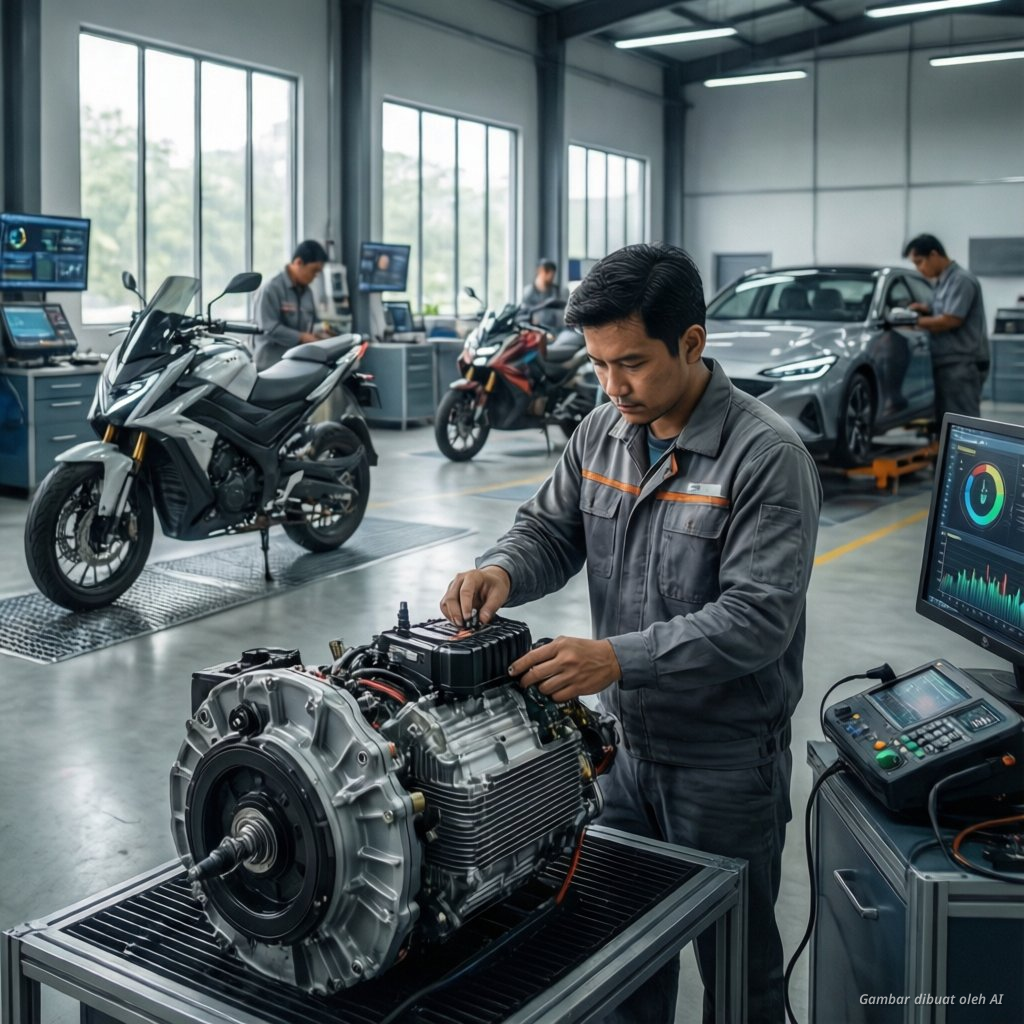
The electric vehicle (EV) industry in Indonesia is undergoing a major transformation. The focus is no longer solely on selling new units. Many consumers and service centers are beginning to look at repair, capacity upgrades, and vehicle conversion as sustainable solutions.
This approach offers an economical alternative to buying a new vehicle. Furthermore, this step supports the circular economy principles being promoted by the government to reduce automotive waste.
A paradigm shift in electric vehicle ownership
Historically, people have tended to replace old vehicles with new units. However, the trend is shifting toward long-term maintenance. Repairing key components such as batteries and controllers is now becoming more affordable.
The Indonesian government is actively encouraging this ecosystem through various regulations. The electric motorcycle conversion program is tangible proof of government support for aftermarket innovation [1]. By utilizing the electric motorcycle conversion program, the public can save costs significantly.
The vital role of conversion workshops and certification
The future success of EV repair depends on the readiness of local workshops. The government continues to encourage the development of conversion workshops to meet strict technical and safety standards [4]. Certification is key to ensuring the quality of modification results.
Many conventional workshops are now transforming into EV electrical specialists. This step helps the development of electric vehicle conversion workshops in various regions. Certified technicians will ensure the safety of high-voltage systems during the repair process.
Battery repair and upgrade technology
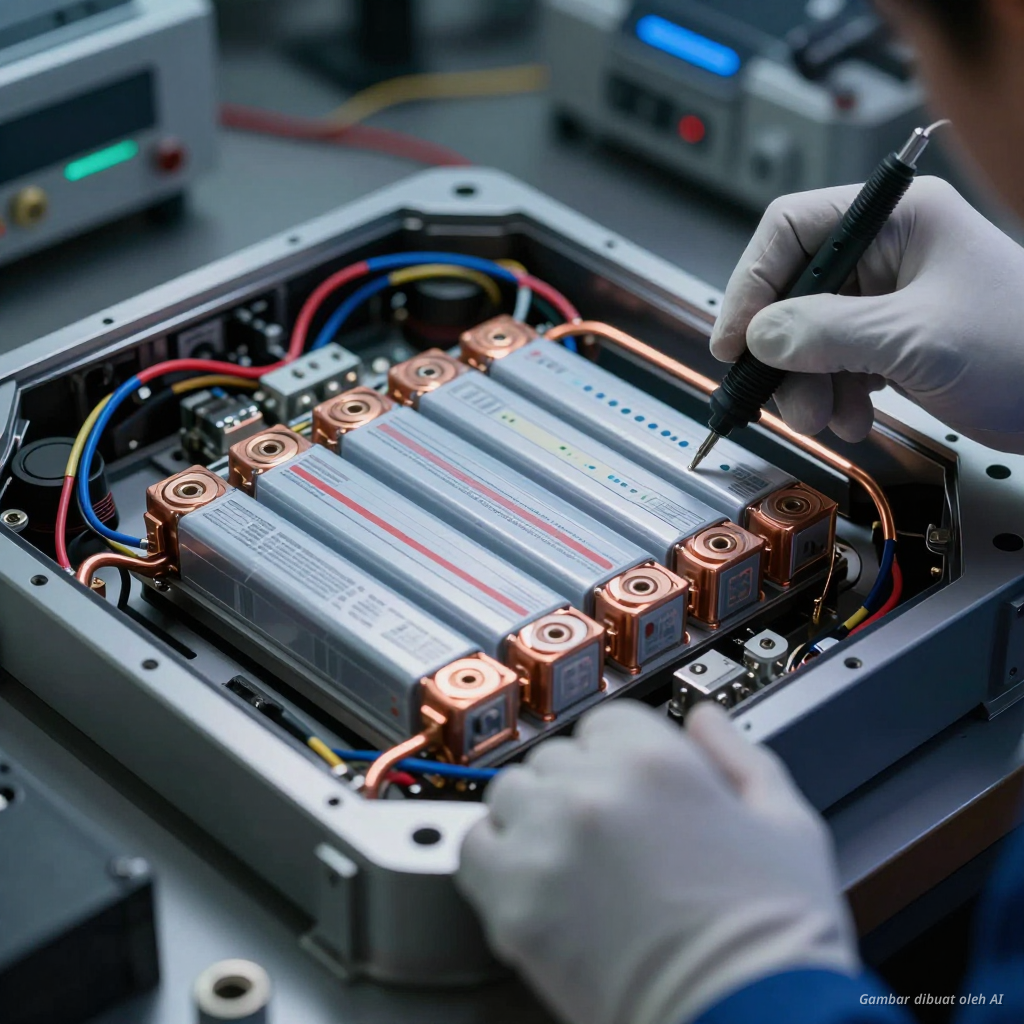
The battery is the most expensive component in an electric vehicle. The future of EV repair focuses on cell balancing techniques and the replacement of faulty modules. This approach is far more efficient than replacing the entire battery pack [3].
In addition to repairs, increasing battery capacity is also a trend. Users can improve the vehicle’s range without having to purchase a new unit. You can learn more about the cost-benefit analysis of electric vehicle battery recycling in Indonesia to understand its economic value.
Supporting infrastructure and the national ecosystem
PT PLN (Persero) plays an active role in supporting this ecosystem. They provide battery swapping infrastructure or SPBKLU to make it easier for users [2]. Modular battery standardization is becoming crucial here.
With the presence of electric motorcycle conversion infrastructure, the burden of battery maintenance for consumers is reduced. Synergy between energy providers and local workshops will create a sustainable ecosystem. This is also in line with efforts regarding education and circular economy awareness in the Indonesian electric vehicle industry.
Challenges and future opportunities
The main challenge today is the standardization of components across brands. Dependence on imported spare parts also remains an obstacle in the field [5]. However, the localization of the component industry is predicted to continue increasing.
Increasing the TKDN (Domestic Component Level) will drastically lower repair costs. In the future, MSME workshops will become the backbone of EV aftermarket services. They will provide fast, safe, and affordable repair solutions for the wider community.
Conclusion
Repairing and upgrading electric vehicles is a smart step toward a greener future. With the support of regulations and continuously developing infrastructure, this option is becoming increasingly realistic. Consumers now have the choice to extend the lifespan of their vehicles more cost-effectively.
More Information
- Electric conversion: The process of modifying a conventional motor vehicle into a battery-based electric vehicle by replacing the combustion engine with a certified electric motor, battery, and control system [1].
- SPBKLU: Public Electric Vehicle Battery Exchange Station, which serves as a place to swap empty batteries for fully charged ones to speed up charging for electric motorcycle users [2].
- Circular economy: An economic model that focuses on reusing, repairing, and recycling components to extend product life cycles and minimize electronic waste in the environment [3].
- Conversion workshop: An automotive repair facility that has received official government certification to safely perform modifications on motor vehicles into battery-based vehicles [4].
- TKDN: Domestic Component Level, which is the percentage of local content in a product or service aimed at reducing dependence on imported goods [5].
Related Posts
-
 Uncategorized
Key factors driving the shift to electric vehicles
Read more →The automotive world is undergoing a major transformation toward an eco-friendly era. In many countries, including Vietnam and Indonesia, interest…
-
 Uncategorized
Why electric vehicles are increasingly in demand by consumers today
Read more →The automotive world is undergoing a major transformation toward an environmentally friendly era. In Indonesia, the trend of using electric…
-
Uncategorized
OTA updates for smart massage chair systems for maximum relaxation
Read more →For long-distance drivers, maintaining physical health is a top priority. Smart massage chairs have become an innovative solution for recovering…