
The role of AI in analyzing driving styles to improve safety
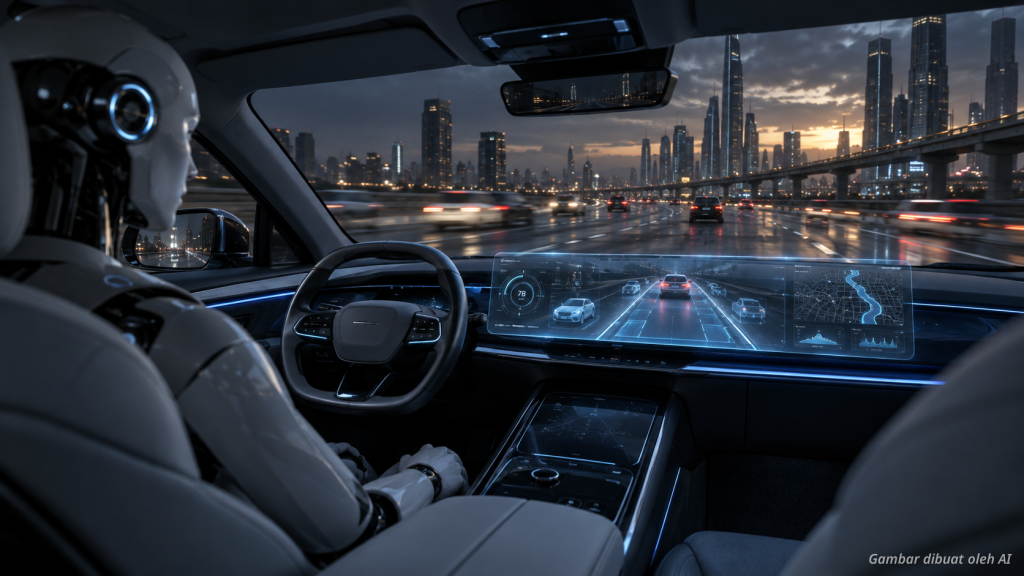
Artificial intelligence (AI) technology has now entered the automotive industry in a highly personal way. Modern drivers can now utilize intelligent systems to monitor their behavior on the road in real-time. With the help of AI, cars are no longer just tools for transportation, but also personal coaches that provide suggestions to improve your driving skills.
The application of AI in vehicles allows for automatic feature adjustments, such as seat settings, temperature, and audio systems personalized to the driver's preferences[1]. Beyond comfort, the main focus of this technology's development is the safety of road users. Intel has explored how the integration of advanced sensors helps drivers avoid potential accidents through precise data analysis.

Why analyzing driving style is important
Many drivers find it difficult to maintain a safe distance when driving at high speeds. Determining the correct distance manually is often a challenge, especially in dense and dynamic traffic conditions[2]. This misestimation of distance often triggers incidents that could actually be avoided.
AI is here to bridge that gap by providing early warnings to the driver. This system is capable of calculating the speed and distance of the vehicle in front accurately in milliseconds. With electric vehicles featuring automatic parking to reduce driver stress, the driver's cognitive load can be significantly reduced.
How AI provides improvement suggestions
AI systems work by collecting data from various sensors installed in the vehicle. This data includes braking patterns, acceleration, and how the driver changes lanes. Once the data is collected, algorithms process the information to provide constructive feedback.
For example, if the system detects that you frequently brake suddenly, the AI will suggest keeping a greater distance from the vehicle in front. Furthermore, this data-driven approach is very helpful in instilling smoother and more efficient driving habits. This not only improves safety but also extends the lifespan of your vehicle's components.
Ethics and flexibility on the road
It is important to remember that technology is only a supporting tool. In some regions, road infrastructure may not yet fully support fully autonomous systems, so the human role remains crucial[2]. Flexible enforcement of rules by local authorities is also key to creating a conducive driving environment.
Drivers must also understand the ethics of sharing the road. If there is a faster vehicle behind you, it is highly recommended to move to a slower lane if possible[3]. AI technology can help remind drivers about this etiquette through notifications on the dashboard screen.
Building a safe driving culture
Competition on the road, as often seen in the context of sports competitions, should not be brought to public roads[4]. The primary focus of every driver should be to arrive at their destination safely. AI acts as a constant reminder for us to remain calm and alert.
The government and relevant agencies also continue to strive to ensure that the use of this technology is not misused to violate the privacy or rights of drivers[5]. Transparency in data collection is the main foundation of public trust in automotive AI systems. International reports often emphasize the importance of protecting individual rights in every new technology implementation.
First steps to using car AI features
For those of you who want to start using AI features, the first step is to recognize the systems available in your vehicle. Many car manufacturers now include guides for using smart features in the purchase package. You can also try AI voice recognition technology in electric vehicles for hands-free control so you can stay focused on the road.
- Study the settings menu on your car's infotainment screen.
- Enable driver assistance features or ADAS (Advanced Driver Assistance Systems).
- Review the weekly driving reports that are usually available in the vehicle's companion app.
- Adjust warning sensitivity to suit your driving style.
The future of smart mobility
In the future, AI will not only provide suggestions but will also be able to predict the behavior of other drivers around you. This is a big step towards the vision of zero accidents on the road. By continuing to adopt this technology, we all contribute to a safer and more orderly transportation ecosystem.
Improving driving skills is a continuous process. Do not hesitate to update your vehicle's software periodically so that the AI system always has the latest algorithms. A safe journey starts from the small decisions we make behind the wheel every day.
More Information
- AI (Artificial Intelligence): The simulation of human intelligence processes by machines, especially computer systems, to perform tasks such as learning, reasoning, and self-correction to improve the efficiency and operational safety of vehicles.
- Safe distance: The empty space that must be maintained between your vehicle and the vehicle in front to provide sufficient reaction time to avoid collisions in the event of sudden braking.
- Driving ethics: A set of norms and polite behaviors while on the road, including yielding to other drivers and obeying traffic signs for mutual safety.
- ADAS: Advanced Driver Assistance Systems are sensor- and AI-based technologies designed to assist drivers in the driving process, such as collision warnings and automatic braking.
- Data privacy: The driver's right to ensure that driving behavior data collected by the vehicle's AI system is managed securely and not misused by unauthorized parties.
Related Posts
-
 Uncategorized
Key factors driving the shift to electric vehicles
Read more →The automotive world is undergoing a major transformation toward an eco-friendly era. In many countries, including Vietnam and Indonesia, interest…
-
 Uncategorized
Why electric vehicles are increasingly in demand by consumers today
Read more →The automotive world is undergoing a major transformation toward an environmentally friendly era. In Indonesia, the trend of using electric…
-
Uncategorized
OTA updates for smart massage chair systems for maximum relaxation
Read more →For long-distance drivers, maintaining physical health is a top priority. Smart massage chairs have become an innovative solution for recovering…