
Automotive display technology and the future of user interfaces
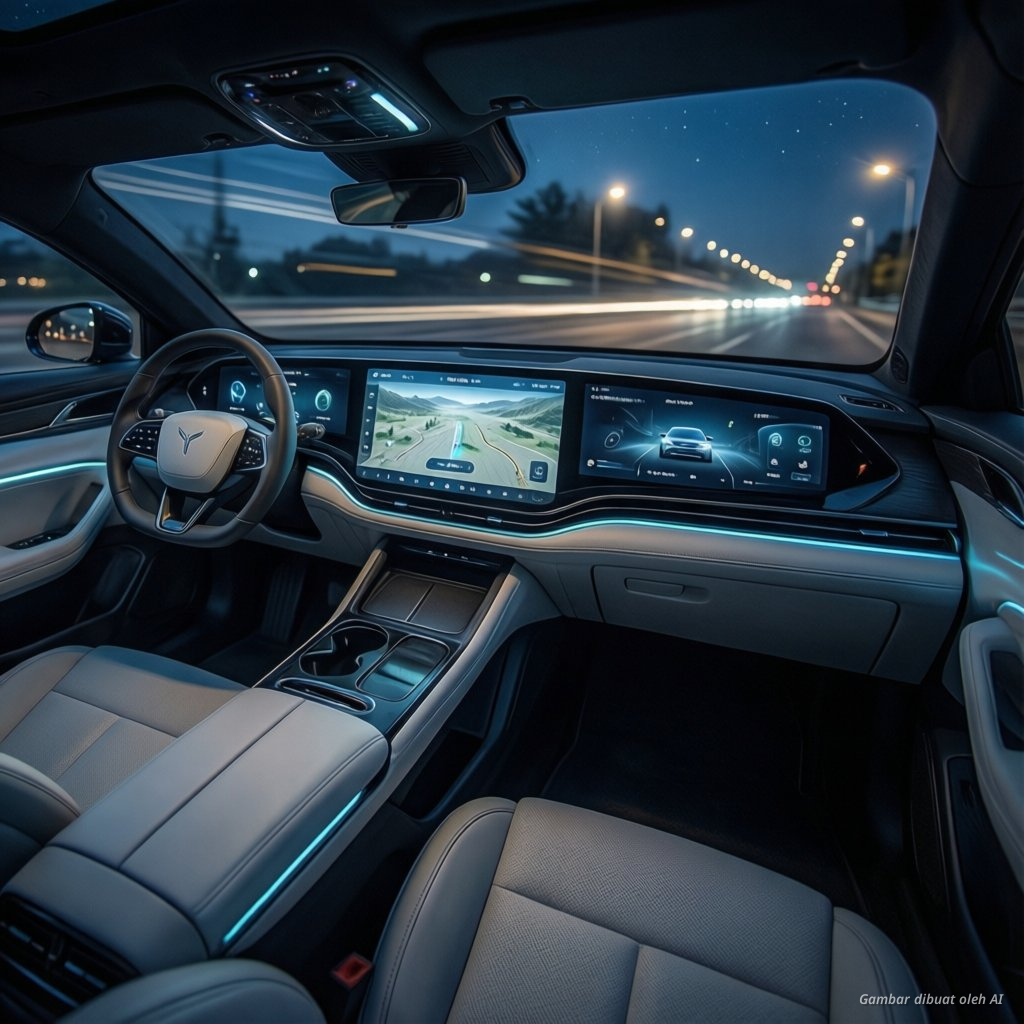
The automotive industry is currently undergoing a massive transformation. The shift from analog controls to integrated digital cockpits has become a primary focus for display technology developers. Today, screens are no longer just complementary tools, but the main control center for drivers and passengers [3].
In Indonesia, this trend is clearly visible with the entry of various electric vehicles (EVs) that rely on large touchscreens as their primary interface. Developers are now challenged to create visual solutions that are not only sophisticated but also safe and intuitive for users in the local market.
The evolution of digital cockpit design
The HMI (Human-Machine Interface) paradigm has changed drastically over the last decade. Previously, instruments and entertainment systems were separate, standalone units. Now, industry trends are moving toward the use of seamless glass panels that span from pillar to pillar [1].
Displays measuring 45 to 57 inches are now being adopted by luxury car manufacturers. This design allows for denser information integration without cognitively overloading the driver. Developers must ensure that the displayed interface remains clean and easy to read.
Display technologies dominating the market
The choice of panel technology is a major determinant of energy efficiency and visual quality. Currently, there are three main technologies competing fiercely in the global automotive industry [2]:
- TFT-LCD (LTPS LCD): The primary choice for cost efficiency with high brightness levels.
- OLED and P-OLED: Offer infinite contrast and design flexibility for curved displays.
- MicroLED: A future-ready technology that offers extreme heat resistance and exceptional brightness.
The use of advanced display technology like OLED is crucial for electric vehicles. These panels help conserve battery power because they do not require a constant backlight, especially when displaying dark-themed interfaces.
Localization and user experience in Indonesia
The Indonesian market has unique characteristics that require software adaptation. Developers must consider aspects of language and user behavior when designing interfaces. Voice command features in Indonesian are becoming a new standard that is highly anticipated by consumers [4].
Beyond language, the integration of local navigation maps that adapt to traffic conditions is a fundamental necessity. Developers can learn more about smart car accessories to enhance user experience in Indonesia to understand the specific needs of local drivers.
Driving safety and distraction reduction
The biggest challenge in automotive display design is maintaining driver focus. Interfaces that are too complex can actually compromise safety. Therefore, the use of haptic feedback has become a solution to provide physical confirmation without the need to constantly look at the screen.
Software-Defined Vehicle (SDV) technology allows for periodic interface updates via Over-The-Air (OTA) systems. This ensures that safety features and UI layouts remain relevant to modern advancements [3].
AR-HUD technology as the new standard
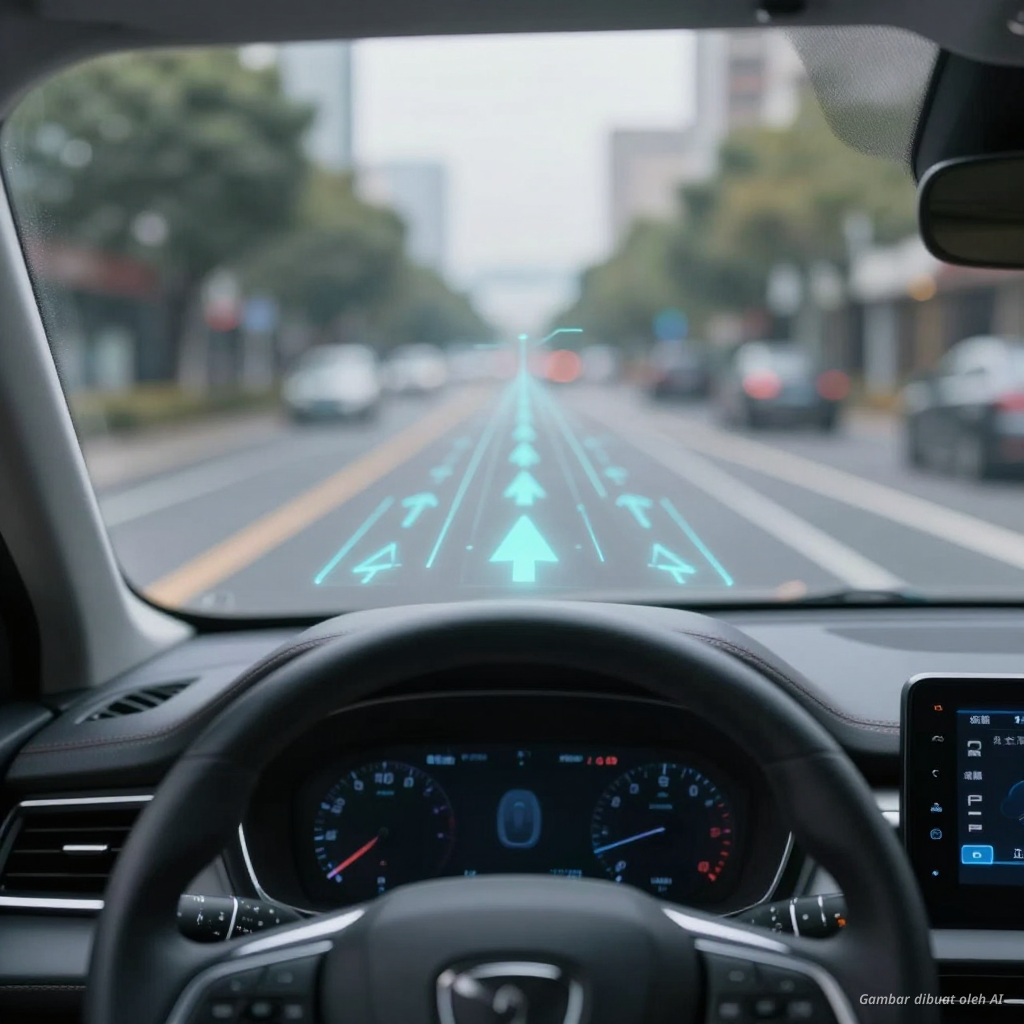
Augmented Reality Head-Up Display (AR-HUD) brings digital information directly into the driver’s line of sight. This technology projects navigation and ADAS warnings onto the windshield, meaning the driver does not need to take their eyes off the road [1].
Proper AR-HUD implementation requires extremely fast data synchronization between vehicle sensors and the display. For developers, this is a major opportunity to raise the standard of driving safety in Indonesia. You can refer to AI-based collision warning systems for the automotive industry as a technical reference.
Device durability in tropical climates
Indonesia has challenging climatic conditions for electronic devices. High cabin temperatures when a car is parked under the scorching sun can damage non-standard display components. Components must meet automotive-grade specifications that are resistant to extreme temperatures [4].
Display developers must ensure that the materials used can withstand high humidity. Temperature durability testing from -40°C to +85°C is an absolute requirement for any display to be marketed in tropical regions. Material quality is the key to ensuring that displays do not experience color degradation or pixel failure in the long term [2].
Conclusion
The future of automotive user interfaces in Indonesia depends heavily on smart and safe display innovations. The integration of OLED technology, AR-HUD, and continuous software updates will be the main differentiators in the market. Developers who can combine design aesthetics with local functionality will win consumer trust in the future.
More Information
- Pillar-to-pillar display: A wide display configuration that stretches from the left A-pillar to the right A-pillar, providing a seamless and expansive visual view across the vehicle’s dashboard.
- Automotive-grade durability: A standard of electronic component resilience designed to operate stably under extreme temperature conditions, high vibration, and humidity often encountered in automotive environments.
- Software-defined vehicle (SDV): A vehicle whose primary functions and features are controlled by software, allowing for the improvement of car capabilities through periodic system updates without replacing hardware.
- Haptic feedback: Technology that provides physical sensations or vibrations to users when interacting with a touchscreen, serving as input confirmation to reduce the need to look at the screen constantly.
- AR-HUD (Augmented Reality Head-Up Display): An advanced projection system that visually displays navigation information and vehicle sensor data onto the windshield, integrated with the actual view of the road.
Related Posts
-
 Uncategorized
Key factors driving the shift to electric vehicles
Read more →The automotive world is undergoing a major transformation toward an eco-friendly era. In many countries, including Vietnam and Indonesia, interest…
-
 Uncategorized
Why electric vehicles are increasingly in demand by consumers today
Read more →The automotive world is undergoing a major transformation toward an environmentally friendly era. In Indonesia, the trend of using electric…
-
Uncategorized
OTA updates for smart massage chair systems for maximum relaxation
Read more →For long-distance drivers, maintaining physical health is a top priority. Smart massage chairs have become an innovative solution for recovering…