
Effective electric vehicle fleet management software for businesses
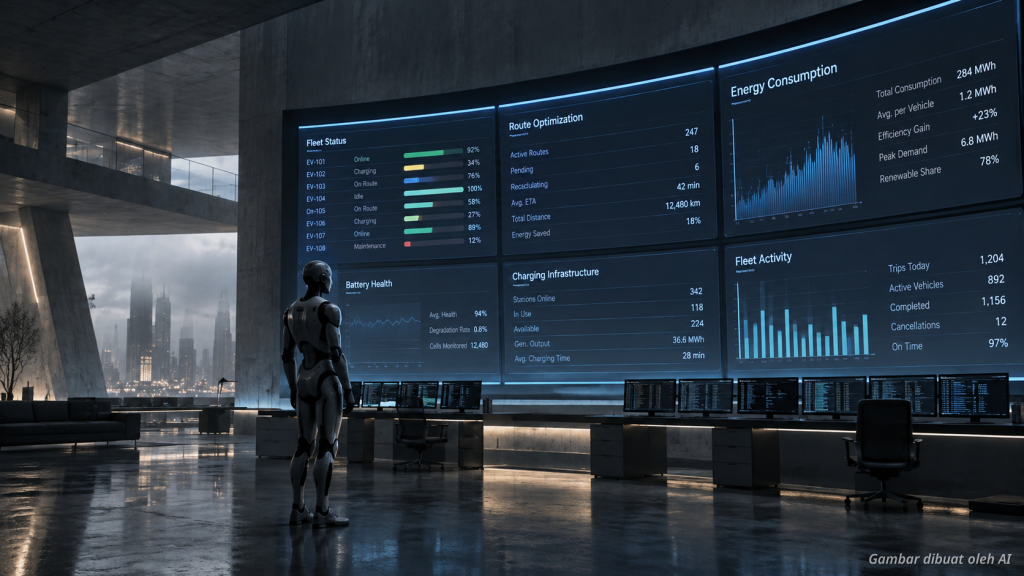
Managing an electric vehicle (EV) fleet requires a different approach compared to conventional vehicles. Modern businesses are now turning to digital solutions to ensure efficient and sustainable operations. The use of specialized software is a key factor in overcoming today's logistical challenges.
With the right technology integration, companies can monitor battery status and vehicle health in real-time. This is crucial for maintaining fleet productivity in the field [1]. Furthermore, sophisticated management systems help companies significantly reduce operational costs.

Why switch to a digital fleet management system
Manual fleet management often leads to costly inefficiencies. Many companies face issues such as sudden breakdowns and missed maintenance schedules [1]. Digital systems offer automated solutions for comprehensive asset monitoring.
Through smart fleet management applications, you can oversee every vehicle with just a few clicks. You no longer need to rely on separate or complex tracking systems [2]. All data is centralized in one user-friendly platform.
Key features of effective fleet software
A good system must have comprehensive features. Here are some essential elements that business owners should look for:
- Real-time monitoring of battery status and engine health.
- Route optimization for energy efficiency.
- Preventive maintenance scheduling to prevent downtime.
- Accurate reporting of operational costs and energy consumption [2].
Advanced GPS integration allows companies to track vehicle positions with high precision [3]. This helps reduce unnecessary vehicle usage and prevents the misuse of company assets.
Route optimization and energy efficiency
Energy costs are often the largest expense component for electric fleets. Without proper oversight, electricity consumption can balloon due to inefficient routes [1]. You can learn more about AI-based delivery route optimization for commercial electric vehicles to improve your fleet's performance.
Good software will analyze driver behavior and road conditions. With this data, the system will suggest the fastest and most energy-efficient routes. This directly impacts the reduction of carbon emissions and the company's monthly operational costs.
Driver management and compliance
In addition to managing vehicles, software should also cover driver data management. You need to securely store license information and the performance history of each driver [4]. This facilitates administrative processes and company compliance audits.
Features of integrated logistics software allow managers to monitor whether drivers have received their assignments correctly [4]. Smooth communication between the head office and the field will improve overall customer service responsiveness.
Preventive maintenance for asset longevity
Electric vehicles require specialized maintenance that differs from fossil-fuel vehicles. Modern management systems provide regular reports on battery condition and electrical systems [1]. With this approach, you can perform repairs before fatal damage occurs.
Investing in modern fleet management solutions is proven to increase operational efficiency [5]. Companies that adopt this technology will have an edge in an increasingly tight market. Ensure the system you choose has the capability to scale as your business grows [3].
Conclusion
Choosing the right fleet management software is a strategic step for today's businesses. With GPS tracking, battery management, and route optimization features, companies can achieve maximum efficiency. Start your fleet's digital transformation now for better long-term results.
More Information
- Telematics: Technology for remote data collection from vehicles, including location, speed, and battery status, which is sent to a central system for analysis to improve fleet operational efficiency.
- Fleet management: The process of overseeing company vehicle assets to ensure optimal usage, controlled costs, and regular maintenance through a centralized software system.
- GPS tracking: A real-time vehicle position tracking system using satellites that helps fleet managers monitor vehicle movement and ensure the security of assets in the field.
- TMS (Transport Management System): Software designed to manage logistics operations, ranging from route planning and driver management to tracking the delivery status of goods.
- Preventive maintenance: A vehicle maintenance strategy performed periodically based on engine and battery condition data to prevent sudden breakdowns and extend vehicle lifespan.
Related Posts
-
 Uncategorized
Key factors driving the shift to electric vehicles
Read more →The automotive world is undergoing a major transformation toward an eco-friendly era. In many countries, including Vietnam and Indonesia, interest…
-
 Uncategorized
Why electric vehicles are increasingly in demand by consumers today
Read more →The automotive world is undergoing a major transformation toward an environmentally friendly era. In Indonesia, the trend of using electric…
-
Uncategorized
OTA updates for smart massage chair systems for maximum relaxation
Read more →For long-distance drivers, maintaining physical health is a top priority. Smart massage chairs have become an innovative solution for recovering…