
Electric vehicles as a backup power source for the home
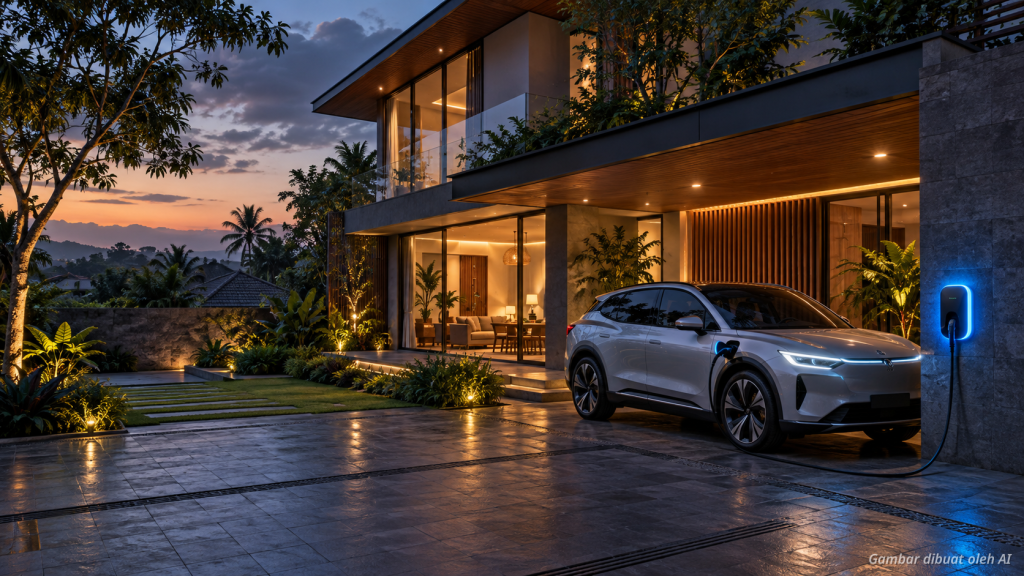
Frequent power outages have become a real challenge for many families in Indonesia. Now, people are beginning to look at innovative solutions to overcome this problem. Electric vehicles (EVs) no longer function solely as a primary mode of transportation. Many households have started utilizing this technology as a reliable backup energy source.
The trend of using used electric vehicles as an additional power resource is becoming increasingly popular in various regions. This phenomenon shows a paradigm shift in the utilization of renewable energy technology at the household level. With affordable electric vehicles, families now have backup options when the main power grid is disconnected [1].
Why electric vehicles are becoming a popular choice
In Indonesia, the appeal of electric vehicles continues to grow due to their flexibility. Many families now own more than one electric vehicle unit for their daily needs [2]. Beyond transportation efficiency, large battery capacity is a significant added value. People in areas prone to flooding or power outages often rely on this technology to keep their activities running [3].
The competitive price of used electric vehicles makes this solution increasingly accessible. For middle-class families, this is a highly profitable dual investment. You get a means of transportation as well as a powerful portable energy storage system [5]. You can also learn more about electric cars with self-diagnostic capabilities to reduce repair time so that battery performance remains optimal.
The technology behind household power supply
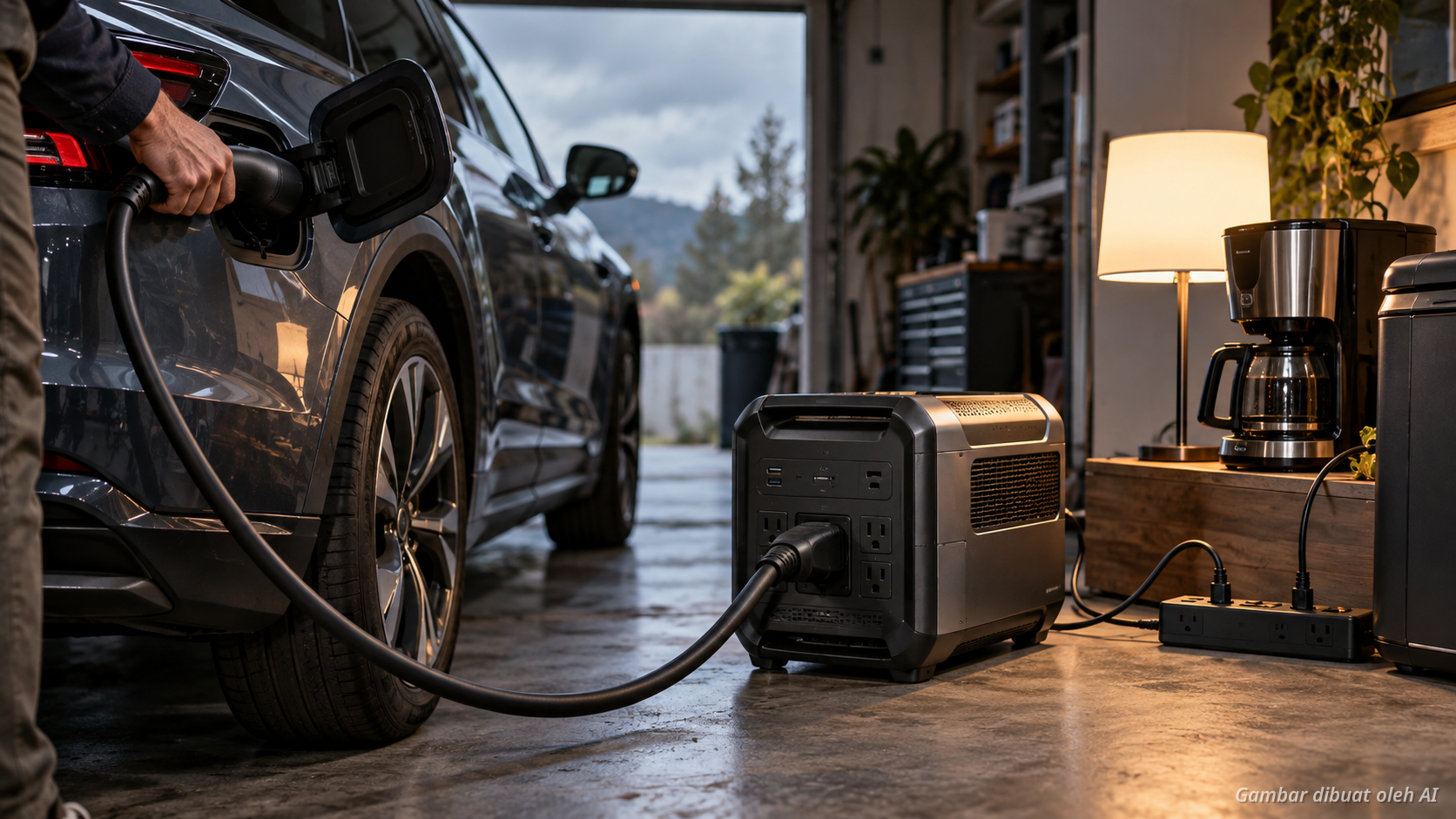
The technology that enables this is called vehicle-to-load (V2L). This feature turns a car battery into a large-capacity power source. Users can connect various household appliances directly to the car's charging port [4]. Through the right power converter, electricity from the car can power refrigerators and other kitchen appliances. Tests have shown that one electric vehicle unit is capable of supporting household electricity needs for a full 24 hours [4].
The results of these tests are quite surprising to many vehicle owners. The remaining battery capacity after intensive use is still very sufficient for emergency needs. This proves that electric vehicles are not just a passing trend. It is a practical solution for those living in areas with unstable electrical infrastructure [4].
Benefits for families in areas with frequent power outages
For people in remote areas or areas prone to power disruptions, energy independence is key. Owning an electric vehicle provides a greater sense of security compared to traditional generators. Conventional generators are often noisy and require expensive fossil fuels. Conversely, electric vehicles operate silently and with minimal exhaust emissions.
Furthermore, electric vehicle maintenance tends to be simpler than that of internal combustion engines. You don't need to worry about complicated oil changes or fuel filters. With the rapid growth in the number of electric vehicle users, support for spare parts and technical services is also becoming widely available [2]. You might also be interested in the role of renewable energy management software for electric vehicle charging stations to optimize charging at home.
First steps to starting a backup power system
If you are interested, start by checking your electric vehicle's specifications. Ensure the model you choose supports the V2L feature or is at least compatible with an external inverter. Do not forget to always use standard and safe electrical equipment. Consult with an expert technician for the installation of an electrical system that connects the car to your home panel.
Also, pay attention to the health of the battery periodically. A well-maintained battery will provide longer endurance when needed as a backup. Investing in an affordable used electric vehicle can be a smart first step for your family [5]. With careful planning, you no longer need to fear sudden power outages.
Conclusion
Electric vehicles offer a future-proof solution to current energy challenges. As a backup power source, this technology is proven to be effective, efficient, and environmentally friendly. The people of Indonesia now have better access to affordable electric vehicles [1]. Take advantage of this innovation to improve the comfort and safety of your family at home. The future of household energy is in your hands.
More Information
- Used electric vehicles: Vehicle units that have changed hands at more affordable prices, now becoming a favorite for Indonesian families as a second mode of transportation and a household energy backup [1].
- Vehicle-to-load (V2L): Advanced technology that allows an electric vehicle battery to distribute power outward to run electronic devices or household appliances during a power outage [4].
- Power inverter: An electronic device that functions to convert direct current (DC) from a vehicle battery into alternating current (AC) used by standard household appliances [4].
- Battery capacity: The total amount of energy that can be stored by an electric vehicle battery, which determines how long the device can supply electricity for household needs [4].
- Electrical infrastructure: The electricity distribution network that includes generation, transmission, and distribution to end consumers, which often experiences disruptions in some regions of Indonesia [3].
Related Posts
-
 Uncategorized
Key factors driving the shift to electric vehicles
Read more →The automotive world is undergoing a major transformation toward an eco-friendly era. In many countries, including Vietnam and Indonesia, interest…
-
 Uncategorized
Why electric vehicles are increasingly in demand by consumers today
Read more →The automotive world is undergoing a major transformation toward an environmentally friendly era. In Indonesia, the trend of using electric…
-
Uncategorized
OTA updates for smart massage chair systems for maximum relaxation
Read more →For long-distance drivers, maintaining physical health is a top priority. Smart massage chairs have become an innovative solution for recovering…