
Solid-state batteries and the future of the circular economy for electric vehicles
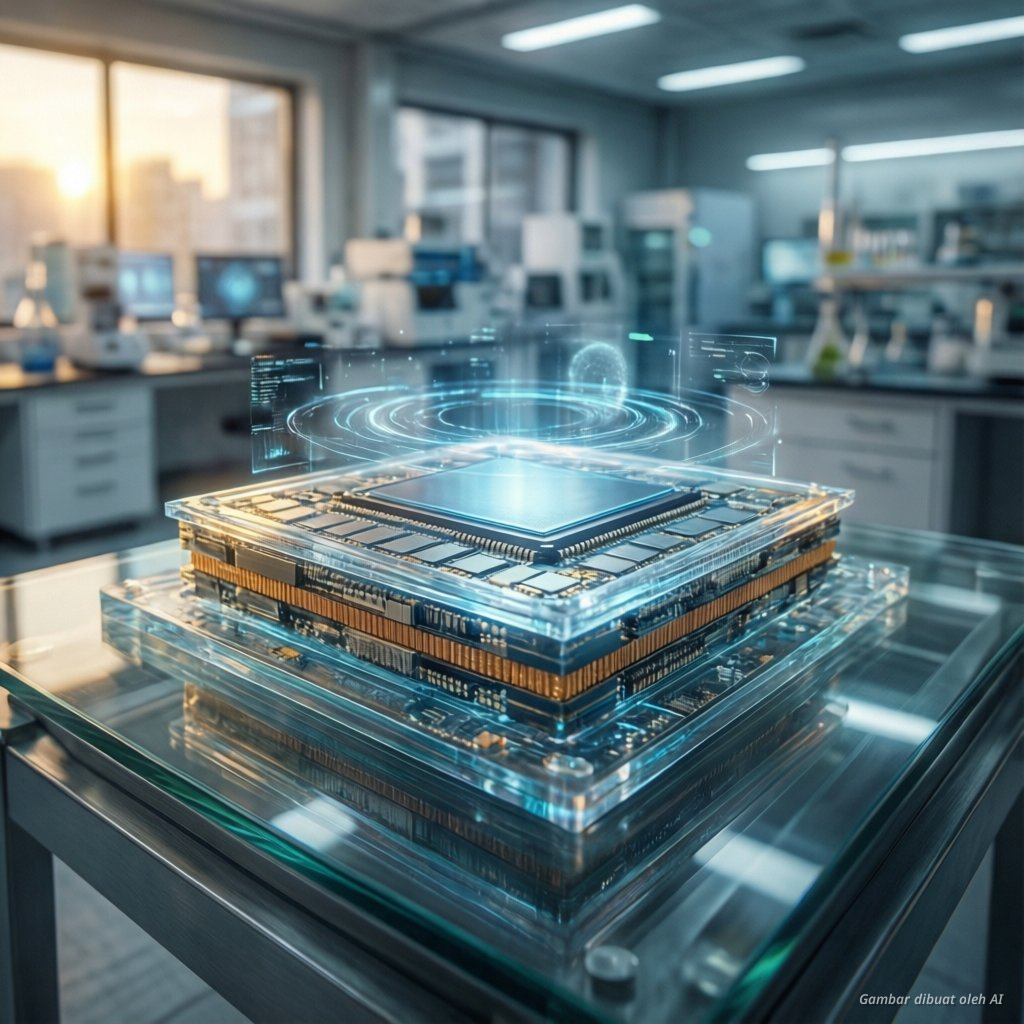
Battery technology continues to evolve rapidly to support the global energy transition. One of the most promising innovations today is the solid-state battery (SSB). This technology offers a paradigm shift in the efficiency, safety, and sustainability of electric vehicles (EVs).
For researchers and technology industry players, SSBs are not just a performance upgrade. They are a key component in realizing a more resilient circular economy within the future automotive ecosystem [1].
Understanding the technical advantages of solid-state batteries
The fundamental difference between conventional batteries and SSBs lies in the electrolyte. Current lithium-ion batteries use flammable liquid electrolytes. Conversely, SSBs use solid materials such as ceramics, polymers, or sulfides [2].
This change in composition provides several significant technical advantages for the industry:
- Much higher energy density, allowing for longer driving ranges.
- Improved safety due to the minimal risk of leakage and fire.
- Ultra-fast charging capability without drastic degradation of internal components.
Indonesia’s strategic position in the global supply chain
Indonesia holds a unique bargaining position in the development of the global battery ecosystem. With the world’s largest nickel reserves, the country has become a focal point for global technology companies [3]. Nickel downstreaming through High-Pressure Acid Leach (HPAL) technology has become a strong foundation for battery precursor production.
The government, through the Indonesia Battery Corporation (IBC), continues to encourage integration from upstream to downstream. Although the current primary focus is on nickel-based batteries, this infrastructure is highly relevant for future cathode development in SSB technology.
The circular economy as a pillar of sustainability
The circular economy in the EV industry is not just a trend, but an operational necessity. Its primary focus is to minimize hazardous waste and maximize the reuse of valuable materials [4]. You can learn more about the circular electric vehicle battery supply chain from mining to recycling to understand this flow in depth.
The application of the circular economy includes three crucial phases:
- Using used batteries for energy storage systems (ESS) or “second-life” batteries.
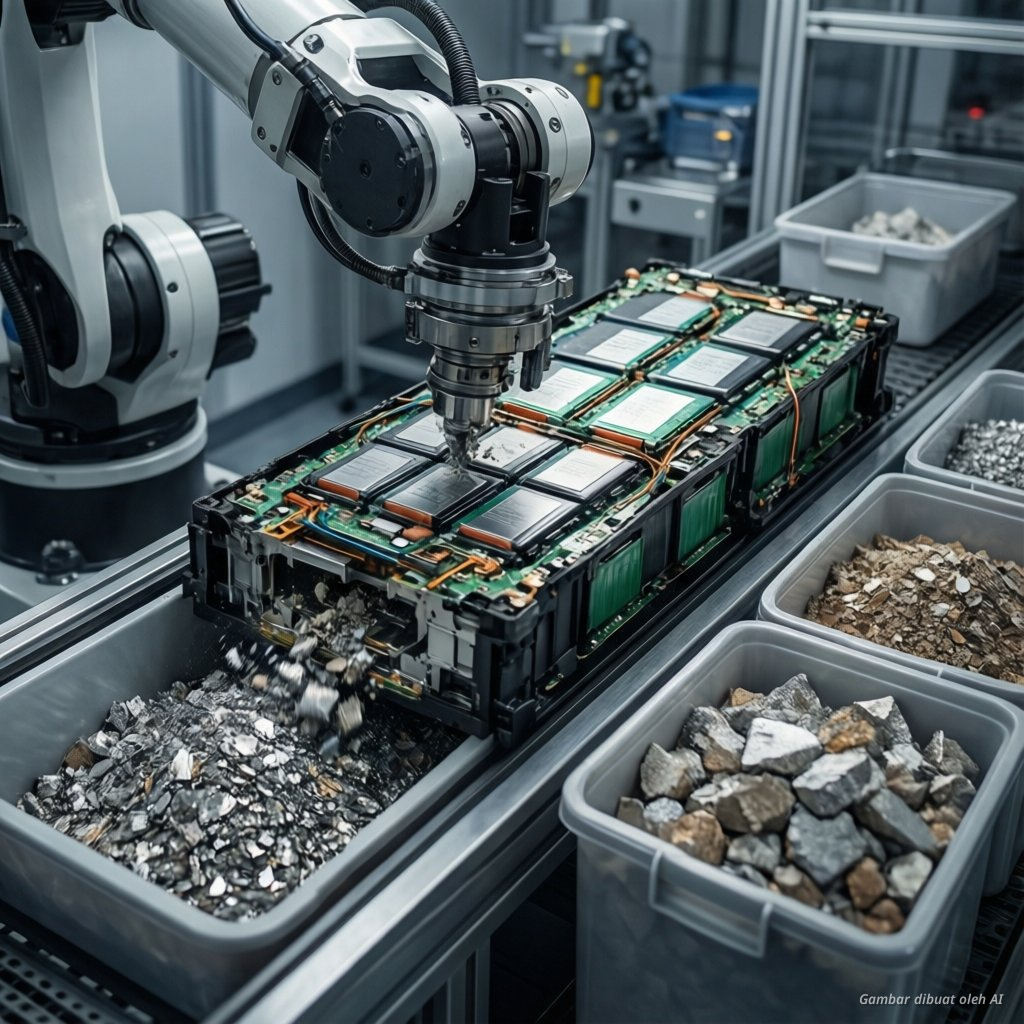
- Recycling materials through hydrometallurgical processes to recover nickel, cobalt, and lithium.
- Reducing manufacturing carbon footprints by utilizing recycled materials as secondary raw materials.
Integrating solid-state technology into the circular chain
Integrating SSBs into the circular economy requires new innovations in recycling methods. Because the electrolyte is solid, mechanical and chemical separation processes must be adapted from current technologies [5]. Researchers are now beginning to explore more efficient ways to extract solid materials.
Furthermore, the naturally longer lifespan of SSBs slows down the accumulation of battery waste. This provides an advantage for manufacturers in meeting increasingly stringent Extended Producer Responsibility (EPR) regulations. The implementation of this policy is also supported by the end-to-end EV supply chain development strategy currently being promoted.
Challenges and opportunities for technology companies
For technology companies, the biggest challenge is the cost of large-scale SSB manufacturing. However, the potential for long-term efficiency far outweighs the initial investment costs. Indonesia, with its wealth of natural resources, has a great opportunity to become a hub for future battery research and manufacturing.
Collaboration between academia, the government, and the private sector is essential. A focus on the potential of used electric vehicle batteries for energy storage systems in Indonesia could be a strategic first step. By strengthening recycling infrastructure, Indonesia will not only be a supplier of raw materials but also a leader in sustainable battery technology.
Conclusion
Solid-state batteries represent the future of electric mobility that is both safer and more efficient. In Indonesia, integrating this technology with circular economy principles will strengthen the country’s position on the global industry map. With the right innovation, recycling challenges can be transformed into new, sustainable economic opportunities.
More Information
- Solid-state battery: A type of battery that uses a solid electrolyte instead of a liquid one, offering higher energy density and a much higher level of safety compared to traditional lithium-ion batteries.
- Circular economy: An economic model that aims to minimize waste and maximize resource use through recycling, reuse, and extending the product life cycle within the industry chain.
- Nickel downstreaming: The process of processing nickel ore domestically into high-value-added products, such as battery cathode precursors, to support the independence of the national electric vehicle industry.
- Hydrometallurgy: A method of extracting metals from ore or battery waste using aqueous solutions, which is a key technique in the battery recycling process to recover valuable materials such as nickel and cobalt.
- Second-life battery: The utilization of electric vehicle batteries that are no longer optimal for mobility but still have sufficient capacity for stationary energy storage applications, such as solar power plant backup power.
Related Posts
-
 Uncategorized
Key factors driving the shift to electric vehicles
Read more →The automotive world is undergoing a major transformation toward an eco-friendly era. In many countries, including Vietnam and Indonesia, interest…
-
 Uncategorized
Why electric vehicles are increasingly in demand by consumers today
Read more →The automotive world is undergoing a major transformation toward an environmentally friendly era. In Indonesia, the trend of using electric…
-
Uncategorized
OTA updates for smart massage chair systems for maximum relaxation
Read more →For long-distance drivers, maintaining physical health is a top priority. Smart massage chairs have become an innovative solution for recovering…