
The role of renewable energy management software for electric vehicle charging stations

The electric vehicle industry in Indonesia is undergoing a very rapid transformation. Charging station developers are now facing major challenges in managing energy consumption. The use of renewable energy management software has become a crucial solution for the sustainability of this infrastructure [1].
The integration of smart technology allows operators to optimize operational efficiency in real-time. With the right software, electrical loads can be managed more intelligently and cost-effectively [2].
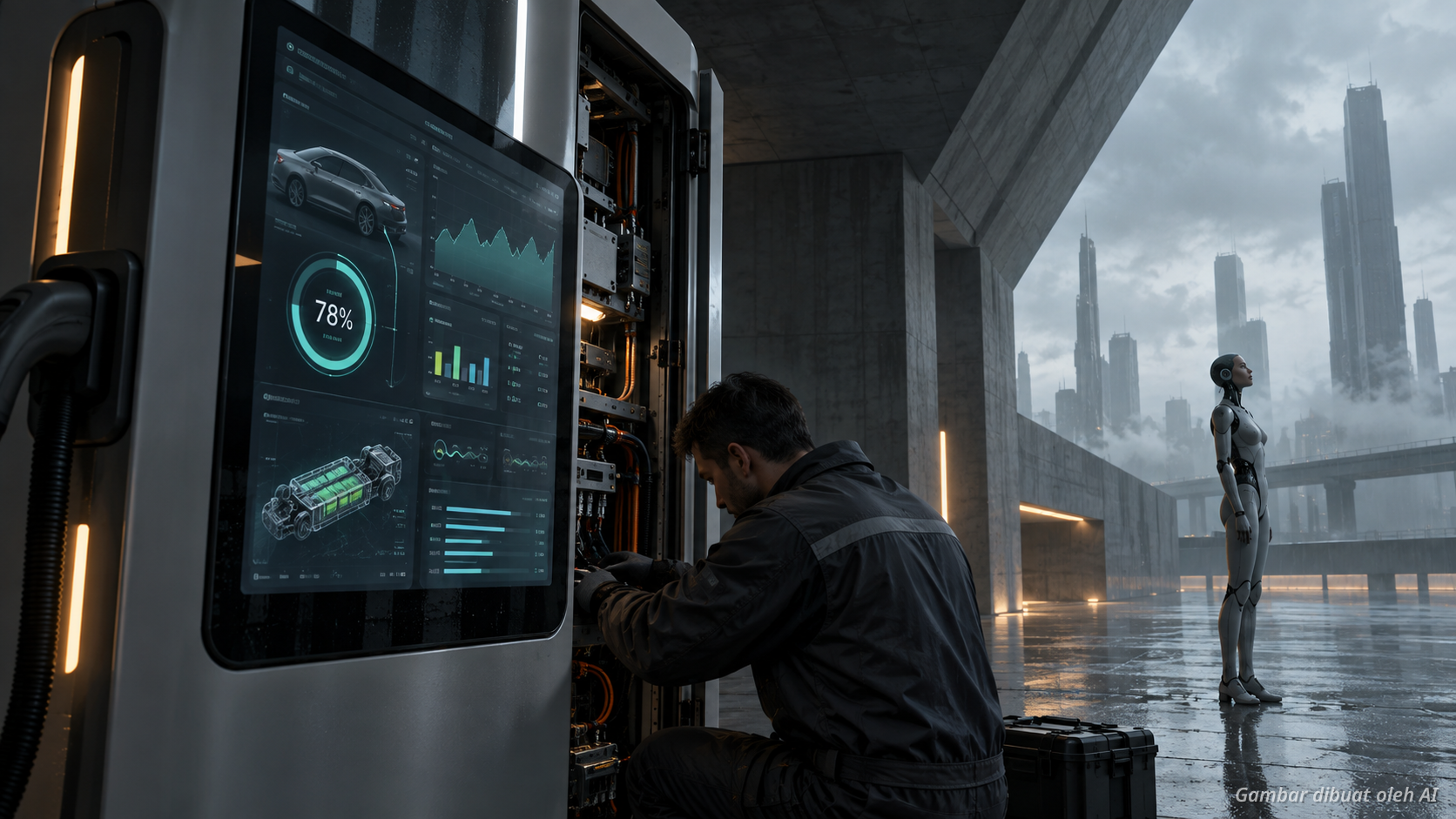
Why energy management is so important
Charging stations require a stable and large supply of electricity. Without a good management system, surges in demand can strain the local power grid. Advanced software helps balance these loads automatically [3].
Infrastructure developers can leverage data to predict peak energy usage. This allows for the more effective integration of renewable energy sources, such as solar power, into charging systems for solar-powered station development in various strategic locations.
The technology behind smart charging stations
Many local startups are now starting to adopt artificial intelligence (AI) in their systems. This technology monitors battery status and optimizes charging routes for electric vehicle users [2]. You can learn more about effective electric vehicle fleet management software for businesses to increase your operational productivity.
This system also serves to maintain infrastructure components proactively. With remote monitoring, the risk of damage to machinery or cables can be minimized before serious issues occur within the electric vehicle startup ecosystem in Indonesia.
Government policy support
The Indonesian government continues to encourage the acceleration of charging infrastructure development. New policies from the Ministry of Transportation aim to expand the network of stations along national roads and toll roads [4]. This provides a great opportunity for developers to expand.
Collaboration between the private sector and the government is the main key to a successful energy transition. Major projects such as the construction of thousands of charging points demonstrate the country's serious commitment to environmentally friendly transportation strategic partnerships for charging network development.
Solar energy integration as a future solution
The use of solar energy is a logical step to reduce the carbon footprint of charging stations. Simulation software like HOMER is often used to design optimal systems [1]. With this simulation, developers can calculate potential long-term cost savings.
Energy management systems can also manage local battery storage. When solar energy production is abundant, the system will store excess power for use during high demand. This is a smart way to maintain the stability of the station's power supply.
The future of charging infrastructure in Indonesia
The automotive world is shifting toward total electrification. Large companies like Foxconn are also starting to look at the potential for manufacturing charging components in this region potential for charging station component manufacturing. Competition will become increasingly intense in the future.
Developers who adopt advanced energy management software will have a competitive advantage. Cost efficiency and system reliability are the main factors sought by consumers. Ensure your infrastructure is ready to face future market challenges [5].
Investment in software technology is not just a cost, but a strategic asset. With proper data management, station operations will become more transparent and efficient. Also, visit AI for route optimization for commercial electric vehicles to understand how AI can help with overall electric vehicle logistics efficiency.
Conclusion
The development of electric vehicle charging stations in Indonesia requires a technology-based approach. Renewable energy management software offers solutions for efficiency, sustainability, and scalability. With the right policy support and continuous innovation, the future of electric transportation in Indonesia looks very bright.
More Information
- HOMER: Industry-standard software used for the simulation and optimization of renewable energy systems, helping developers design the most efficient and cost-effective charging station configurations.
- Smart charging: A smart charging system that uses algorithms to dynamically regulate the flow of electricity, preventing overloads on the local power grid based on real-time demand.
- EV infrastructure: The physical network consisting of charging stations, cables, and supporting hardware required to recharge electric vehicle batteries safely and quickly.
- Renewable energy: Energy sources derived from sustainable natural processes, such as solar and wind power, which are integrated into charging stations to reduce dependence on fossil fuels.
- Load management: The technical process within software to balance the distribution of electrical power at charging stations to prevent disruptions to the main power supply in the surrounding area.
Related Posts
-
 Uncategorized
Key factors driving the shift to electric vehicles
Read more →The automotive world is undergoing a major transformation toward an eco-friendly era. In many countries, including Vietnam and Indonesia, interest…
-
 Uncategorized
Why electric vehicles are increasingly in demand by consumers today
Read more →The automotive world is undergoing a major transformation toward an environmentally friendly era. In Indonesia, the trend of using electric…
-
Uncategorized
OTA updates for smart massage chair systems for maximum relaxation
Read more →For long-distance drivers, maintaining physical health is a top priority. Smart massage chairs have become an innovative solution for recovering…